Back to the Dawn is a prison escape RPG that blends strategic gameplay with rich character-driven storytelling, all wrapped in evocative pixel art. The setup is simple but layered: there are 21 in-game days to navigate prison life, surviving its routines, negotiating its politics, and plotting an escape. There are two playable protagonists that frame the experience differently: Thomas, a journalist wrongly accused, and Bob, an undercover detective. Both have distinct storylines and gameplay nuances which gives the game a reason to revisit it at least a couple of times.
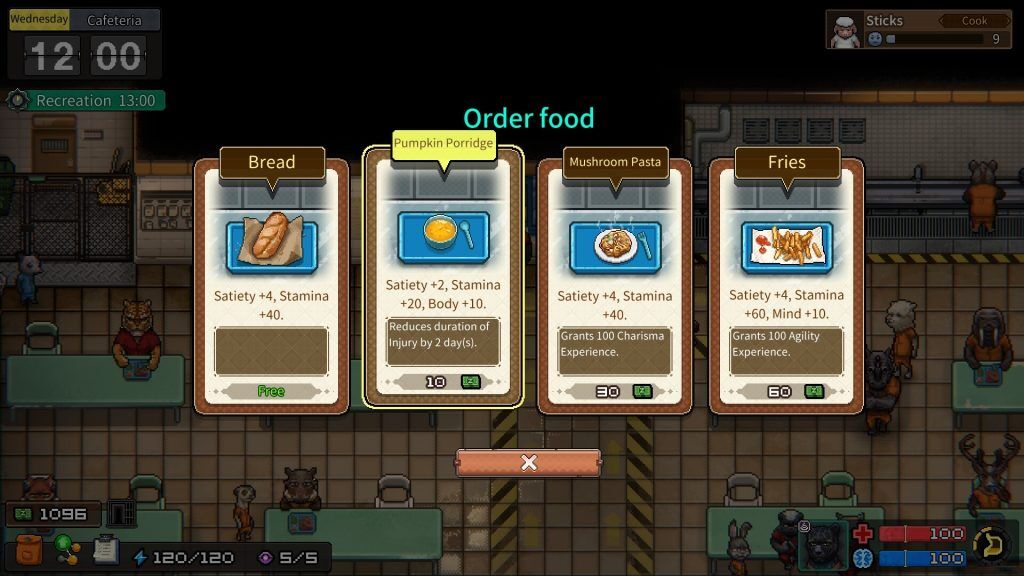
The prison in Back to the Dawn is more than just a setting. Every inmate and guard follows routines, and the world operates on its own clock whether you’re watching or not. With over 40 unique inmate characters, the prison feels alive, bristling with shifting allegiances and hidden opportunities. Factions and gangs demand your loyalty or manipulation while seemingly small interactions can spiral into larger conflicts or open new avenues of escape. The strict cadence of prison life like meals, yard time, roll call, creates tension and forces careful planning.
At its core, the game is a blend of time management, RPG progression, and immersive simulation. Each day is divided into opportunities to train, read, craft, work, or interact with fellow inmates. These actions feed into your stats (i.e., Strength, Agility, Intelligence, and Charisma) which in turn open different strategies in how to tackle the game. A physically powerful character can brute force their way through problems, while a persuasive one might bribe guards or talk their way into forbidden areas. Stealth and crafting open entirely different playstyles, rewarding those who prefer careful scheming over confrontation. The freedom of choice ensures that no two runs feel the same.
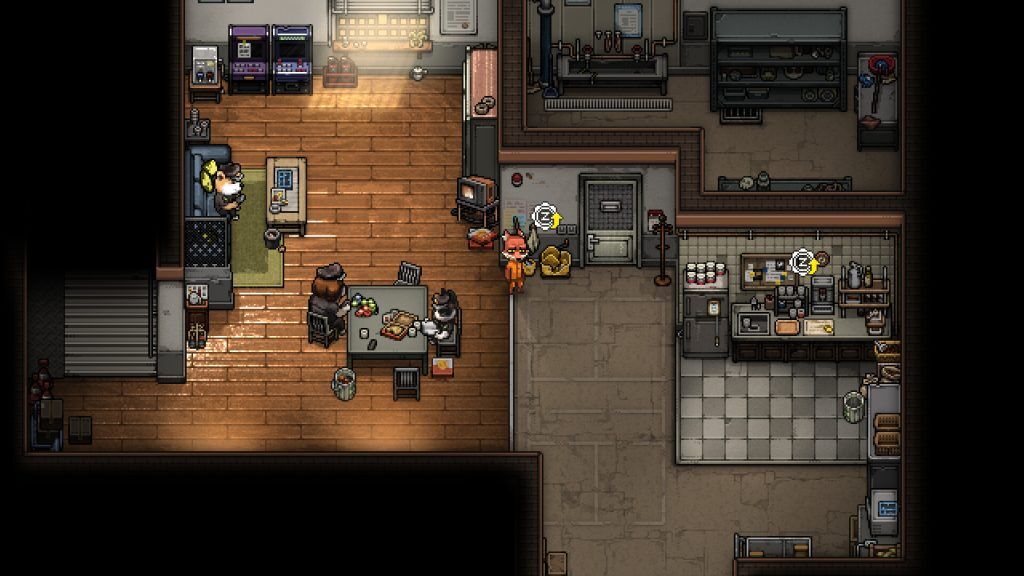
Escaping the prison is never a straightforward task. Players can dig tunnels, forge documents, orchestrate distractions, or manipulate guards into looking the other way. The diversity of methods is matched by the weight of failure; one mistake can cost valuable days or even end a playthrough. The inclusion of a save system called “Memory Recall”, which allows you to rewind up to 24 in-game hours, balances the harsh consequences without erasing tension. This creates a dynamic where experimentation feels encouraged, but success is always earned.
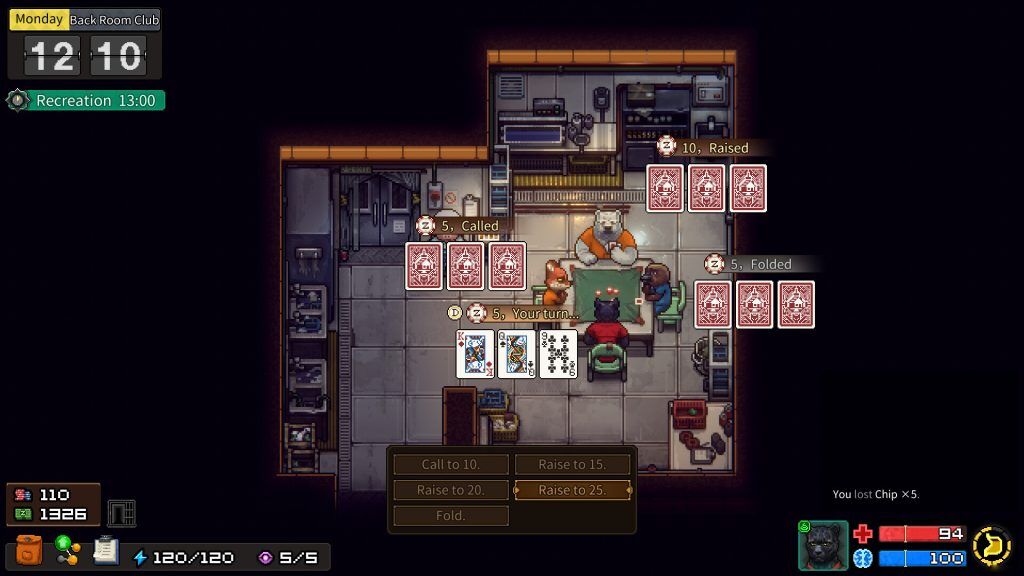
The supporting cast of Back to the Dawn gives the prison its emotional core. Quests range from small favors and smuggling runs to elaborate schemes with long-term payoffs. Inmates feel memorable and distinct, and interacting with them is essential not only for narrative depth but also for practical survival. Mini-games like cooking, foosball, or working out inject variety into the routine and tie back into stat progression or character relationships. These moments of levity and routine keep the game from being oppressively grim while still reinforcing the stakes of daily life behind bars.
The presentation carries much of the weight. Pixel art is detailed and atmospheric, with expressive character animations and moody lighting that give each corner of the prison its own identity. Environments, from the cafeteria to the chapel to the showers, are distinct and visually rich. Character designs make every inmate instantly recognizable, while the soundtrack, though understated, adapts to the game’s shifting tones and contributes to the overall immersion.
Where the game struggles most is its difficulty curve. The early hours can be punishing, with little onboarding to guide new players through its overlapping systems. The 21-day timer is both its greatest strength and a potential stumbling block, creating constant tension but also making mistakes feel overwhelming. Combat, while functional, is not the game’s strongest system, and many players will find it more rewarding to focus on social or stealth approaches. For those who value clear tutorials and smoother pacing, the learning curve may feel more like a barrier than a challenge.
Ultimately, Back to the Dawn succeeds as a dense, demanding, and rewarding RPG. Its layered systems, strong cast of characters, and wide array of strategies give it remarkable depth. While its steep learning curve and limited onboarding may deter some, those who persist will find a prison simulation rich in both gameplay and narrative variety. It is a game that thrives on tension, choice, and consequence, offering a breakout experience for players willing to embrace its challenges.
This review is based on a retail copy of the game provided by the publisher.
Back to the Dawn
- Art Style 8/10
- Difficulty Curve 5/10
- Storytelling 8/10
7/10
Back to the Dawn is a tense, rewarding prison escape RPG where strategy, social maneuvering, and choice drive the gameplay experience. Escape routes are varied, blending stealth, persuasion, and cunning, while the save system softens failure without losing tension. Rich pixel art, expressive animation, and engaging storytelling elevate the experience, making it highly replayable despite a steep learning curve. It is a demanding but immersive strategy RPG.