I’ve said this a million times, but sometimes the most deceptively simple things can be the most successful. Something doesn’t need to be mechanically complicated, graphically superior, or narratively dynamic to be fun. I think we spend far too much time pushing for whatever the next groundbreaking masterpiece is going to be that we forget what we have, or what made us enjoy gaming in the first place. Please bear this in mind when we discuss today’s game. It isn’t deep, it isn’t mechanically a million years ahead of its time. and it won’t be winning any gaming awards for its plot. Does this make it any less fun? Absolutely not, and I’m going to explain why. The game is GUG, I’m playing it on PC, and I’m having a blast.
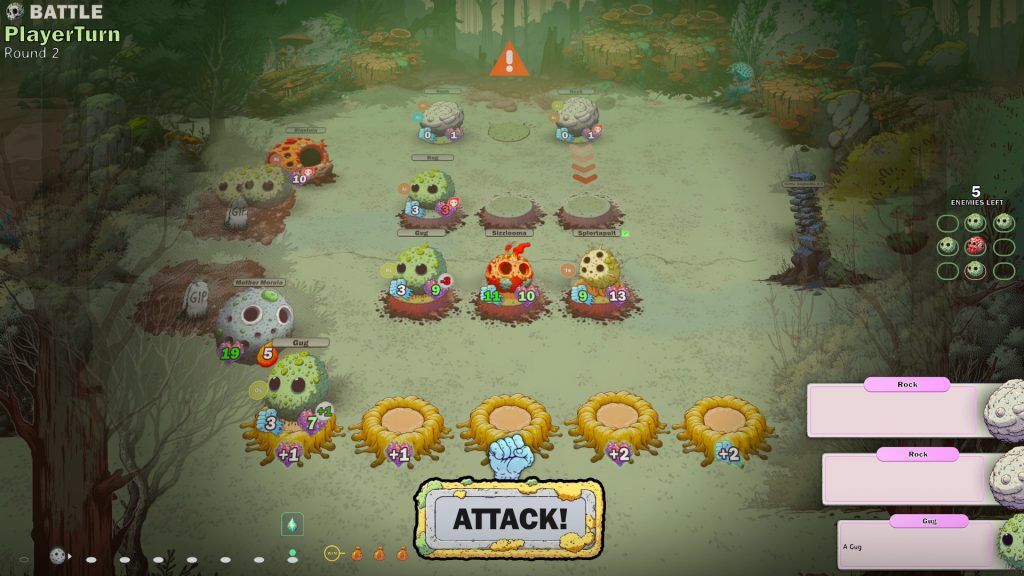
When I say GUG isn’t doing anything mechanically groundbreaking, I’m only being partially fair. From a play perspective, you’re dropping little warriors, or Gugs, onto platforms and watching while they duke it out with each other. It’s all point and click, and really nothing we haven’t seen before. What makes Gug clever is what’s going on in the background.
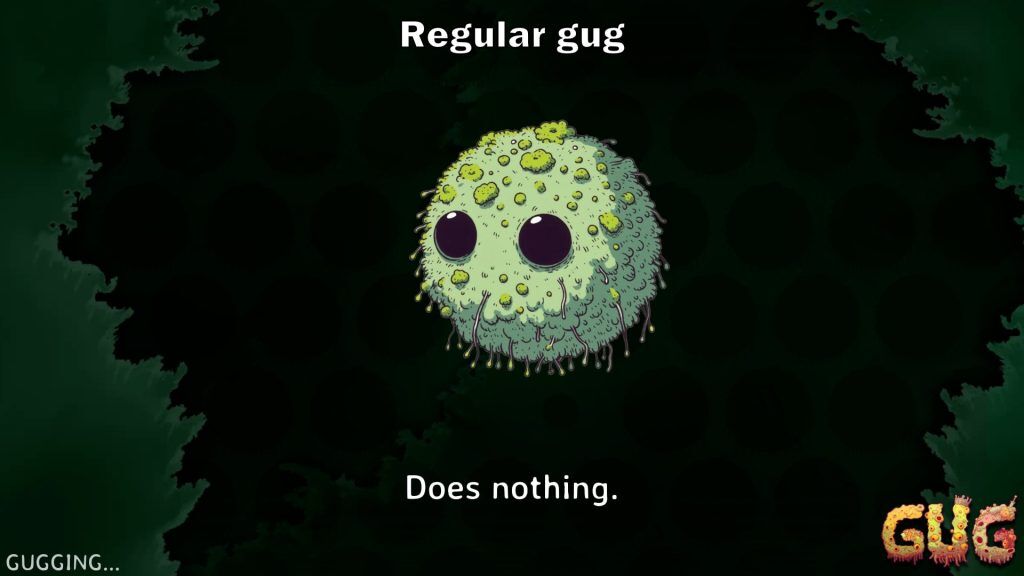
Gugs are bizarre, spherical creatures with an almost infinite number of abilities. In their most basic form, they’re little green balls that have very basic stats and don’t do anything at all other than attack when asked to. Gugs, however, are highly customizable little things. You evolve them by typing any phrase or set of words that your little heart desires. The correct keyword, and they’re suddenly poisonous, or tanky, or have the ability to create minions. The game decides how it’s going to distil your phrase into something usable and then spits out a brand new gug with the acquired abilities.
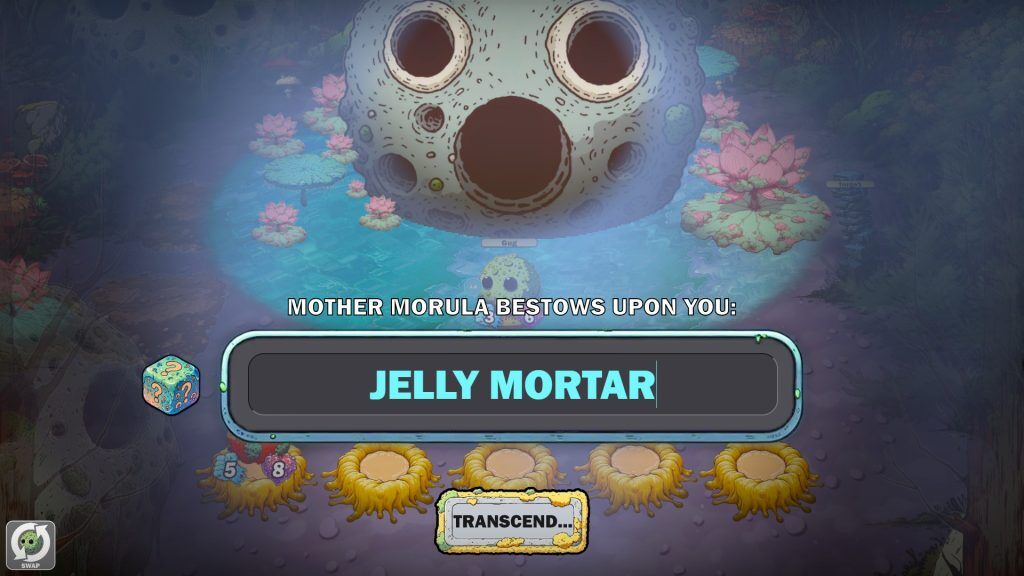
This is a case of genuinely getting what you asked for. At the beginning, you’re just stabbing in the dark, and this can make the game feel very difficult. You’ll sit there and see your idea get smashed to bits because it either doesn’t work with the other Gug’s you’ve created or because it simply doesn’t work. It’s great having a minion that can heal, for example, but not if it’s at the beginning of the game and it can’t heal itself. Having a warrior that creates weaker units is useful, but only if blocking is a viable strategy. Getting the balance right isn’t easy, and it’s all on you.
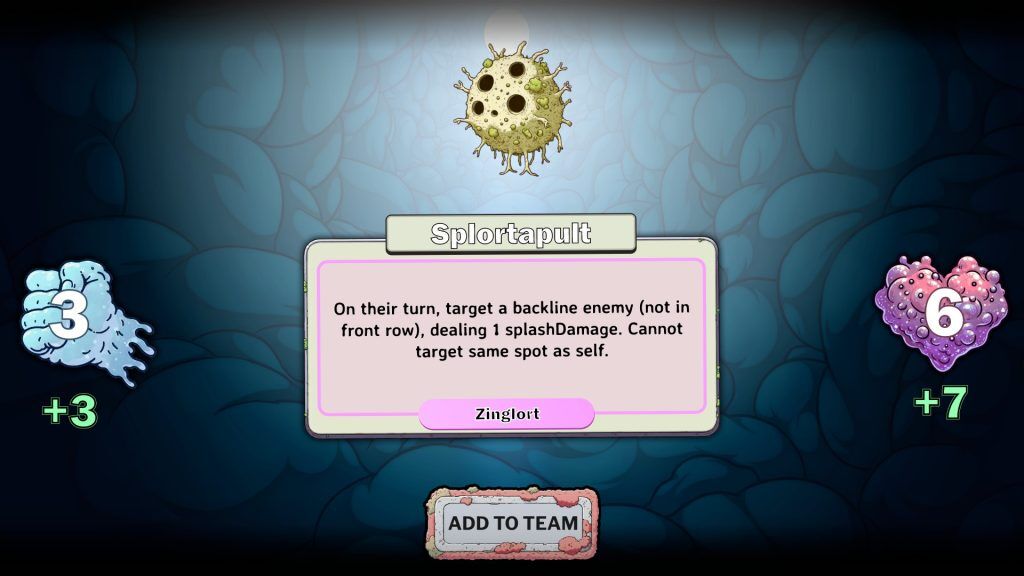
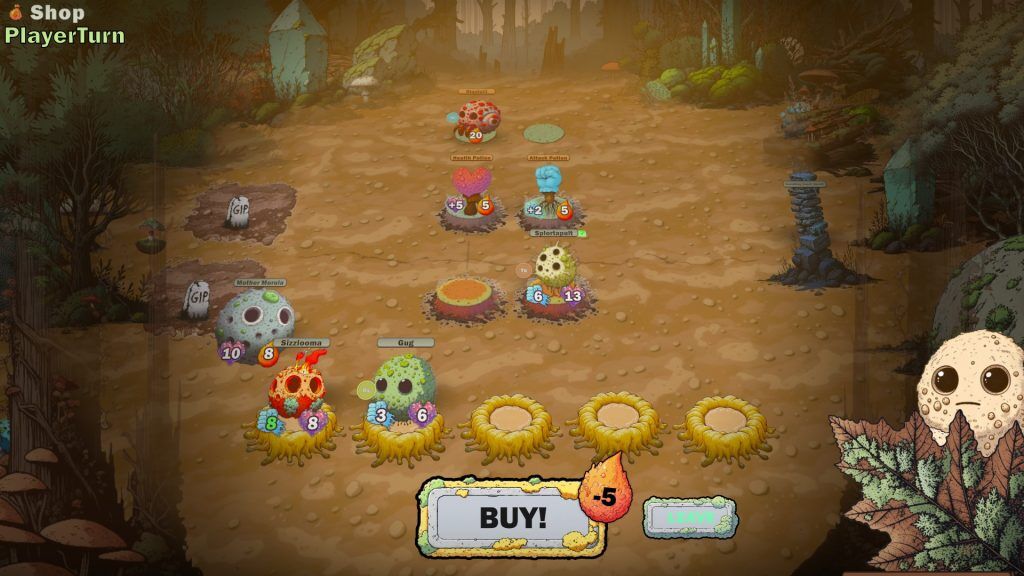
GUG is a roguelike in the truest sense because it’s taking procedural generation to the next level. The level design probably isn’t anything we haven’t seen before. You get the mix of shops, battles and (in this case) evolving pools that we would expect to see in the roguelike format. These things are never in the same place twice, and the enemies are randomised constantly. The strategy is, as with most roguelikes, balance. The fact that you are generating your own army on the fly only adds to the procedural nature of play. You obviously have a massive influence on how the mechanics work, too, which is great.
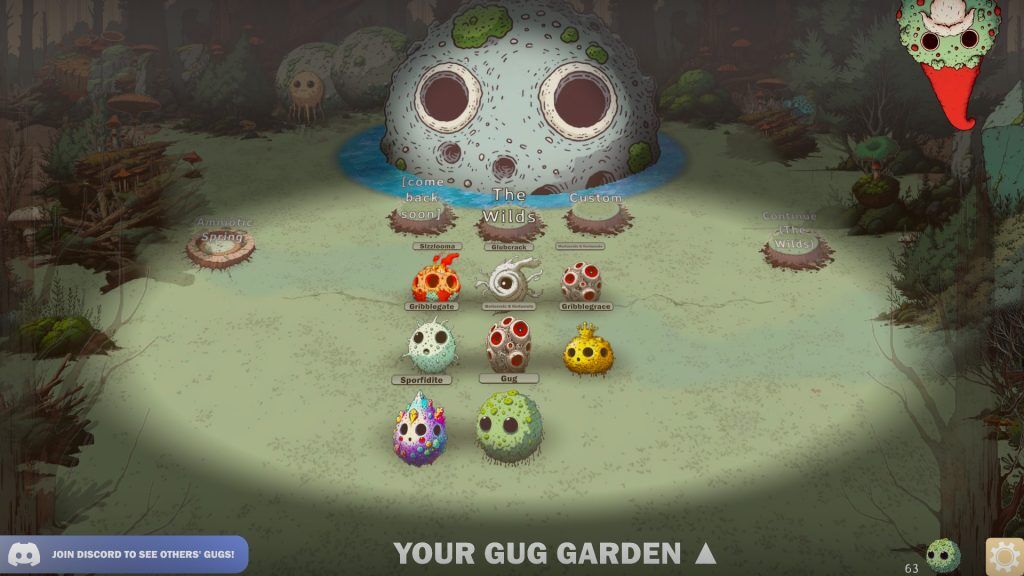
So there’s a lot to like here if you like games that are more experimental. The graphics are colourful, the sound is fitting, and everything plays as it should. I think a lot of your enjoyment of this game will depend on the choices you make. A few bad keywords and you can literally kill your own team. The onus to prevent this isn’t on the game, though; it’s on you. Not everyone is going to like having quite that much agency placed on them.
There is also another argument that I think needs to be addressed here. GUG is built using a generative AI framework for its core mechanics. I know some of you have a visceral dislike of AI being used in a lot of different scenarios, so here’s my two cents. I don’t think we currently have another way to easily program the amount of variation this game offers. For me, as long as nobody is losing their job to a computer, and as long as AI isn’t being used in a way that feels lazy, I think it deserves to be given a chance. It’s a useful tool, as long as it’s just being used as that, a tool. In the case of Gug, the use of AI is fundamental to the game working as it does, so I don’t think it’s fair not to play the game simply because it adopts an AI framework in this instance.
All in all, I’m having a lot of fun with this title. Is it perfect? No, it isn’t, but I don’t think anything that takes an experimental approach truly can be. Is it fun? Well, I think that will depend on you as a player because you’re making so much of your own experience. For me, GUG is an easy-to-play but hard to master strategy battler with a lot of replayability. With updates and quality of life patches that I think will likely come, this is going to be a game that’s well worth playing for those of you who like the strategy genre.
This review has been written based on a retail copy of the game provided by the publisher.
Pretty GUG!
- Look and Feel 7/10
- Difficulty 7/10
- Replayability 9/10
- Value for money 9/10
8/10
An interestring addition to the strategy genre.
GUG is a game with a clear framework in terms of mechanics that puts a lot of the onus and agency of play on the player with respect to how those mechanics are executed. The level of procedural generation involved can make for a result that can vary wildly. I think if you want a game where you’re told what to do and you just do it in a linear sense, this might go a step too far. If, like me, you don’t mind dropping yourself into something experimental and just seeing what you can create, you should have quite a bit of fun here.